

Understanding Crypto Derivatives and Leveraged Trading: A Comprehensive Guide
Diving into the world of cryptocurrency extends beyond merely buying and holding coins like Bitcoin. Complex financial instruments, once exclusive to Wall Street, are now at the forefront of the digital asset landscape. Two of the most intriguing—and risky—tools in this arena are crypto derivatives and leveraged trading. These sophisticated instruments enable traders to predict market movements and hedge against potential losses, utilizing complex algorithms and historical data analysis. By applying technical indicators such as Moving Averages (MA), Relative Strength Index (RSI), and Bollinger Bands, traders can make strategic decisions with precision. However, these tools can also lead to significant losses if not managed correctly.
This guide aims to simplify these complex concepts. We will explore what derivatives entail, how leverage enhances trading capabilities, and the strategic applications of these tools. Crucially, we will examine the serious risks involved and provide practical tips for managing them safely. Whether you’re new to crypto trading or a seasoned trader looking to expand your knowledge, this article will equip you with the essentials to handle these powerful instruments with confidence and caution.
Section 1: What Are Crypto Derivatives?
At their core, crypto derivatives are financial contracts derived from the value of an underlying cryptocurrency. Instead of directly dealing with a coin like Bitcoin or Ethereum, traders engage with contracts that speculate on future price movements. According to a study by the Blockchain Research Institute, over 40% of crypto traders use derivatives for hedging and speculation, underscoring their significance in risk management and capitalizing on market volatility.
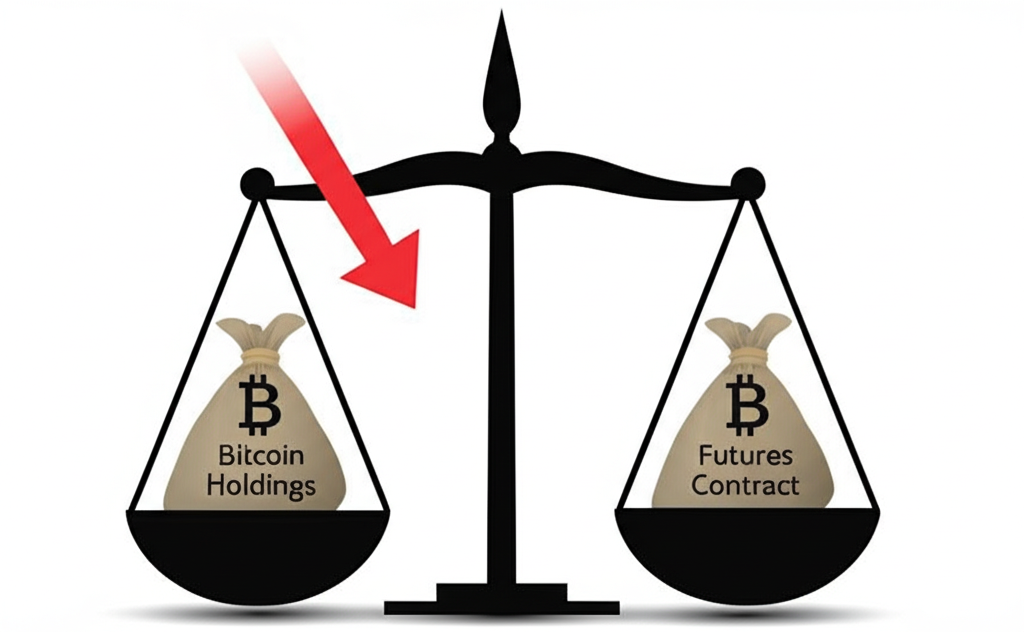
The Core Types of Crypto Derivatives
Several derivative types are fundamental in the crypto market:
1. Futures Contracts
A futures contract is an agreement to buy or sell a specific amount of cryptocurrency at a predetermined price on a future date. For instance, you might agree today to purchase 1 BTC for $70,000 in three months, irrespective of the market price at that time.
2. Perpetual Swaps (or Perpetuals)
These are a unique type of futures contract popular in crypto. Unlike traditional futures, perpetual swaps don’t have an expiration date. Traders can maintain a leveraged position indefinitely, provided they have sufficient collateral, with price alignment achieved through a “funding rate.”
3. Options Contracts
An options contract grants the holder the right, but not the obligation, to buy (a “call” option) or sell (a “put” option) a cryptocurrency at a set price before a specific date. This functions similarly to an insurance policy—traders pay a premium for the flexibility to act if the market moves favorably, capping potential losses to the premium paid.
Section 2: The Engine of Derivatives: Understanding Leveraged Trading
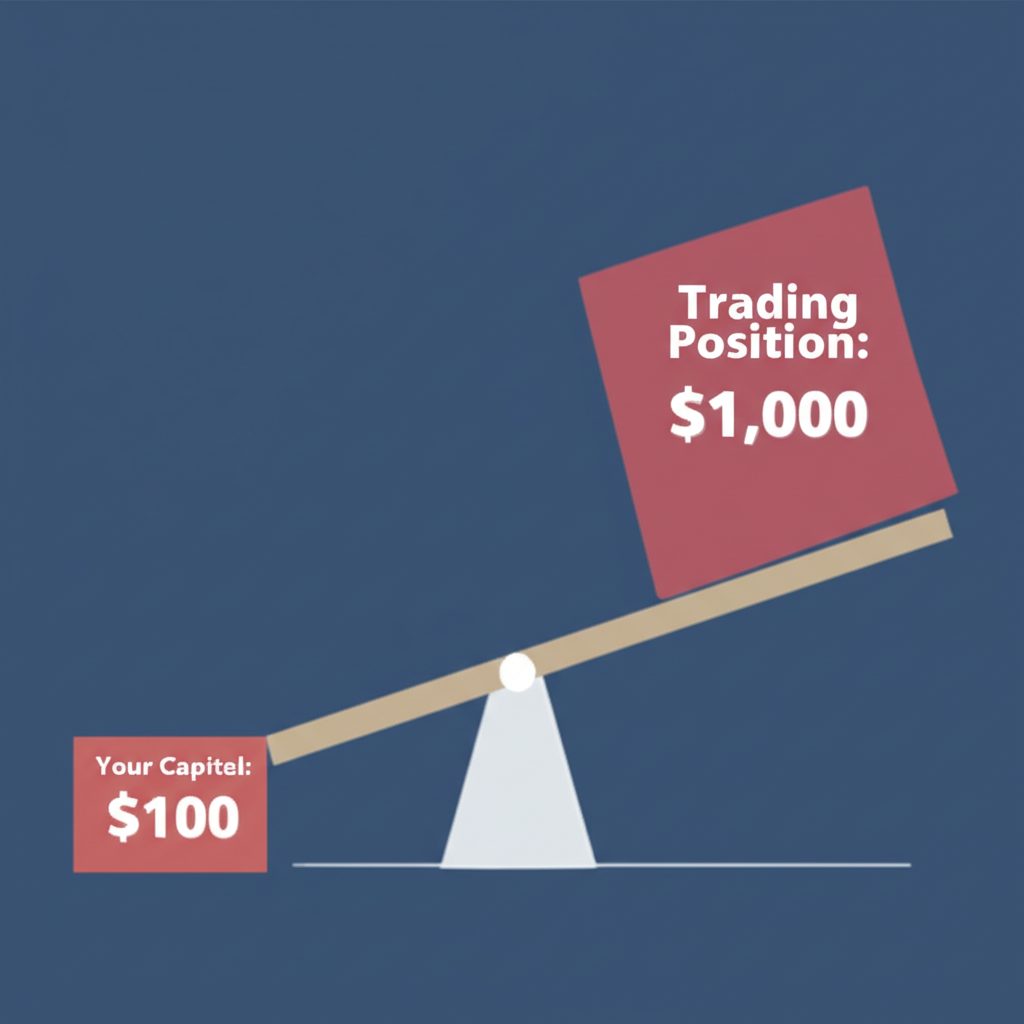
Leverage amplifies the power of derivative trading. It involves using borrowed funds from an exchange to magnify the size of a trading position beyond what one’s capital alone would permit. Leverage is often expressed as a ratio, such as 5x, 10x, or even 100x.
How Leverage Works: A Practical Example
Consider you have $100 and anticipate Bitcoin’s price will rise. Without leverage, you could purchase $100 worth of Bitcoin. A 10% price increase would yield a $10 profit.
Using 10x leverage:
- Your initial $100 (your “margin”) controls a $1,000 position ($100 x 10).
- If Bitcoin’s price rises by 10%, your $1,000 position grows to $1,100.
- Upon closing the position, you repay the $900 borrowed and retain $200, realizing a $100 profit—a 100% return on your initial investment, not just 10%!
The Double-Edged Sword: Liquidation
While leverage can amplify gains, it can equally magnify losses. In the example above, if Bitcoin’s price had fallen by 10%, your $1,000 position would decrease to $900, erasing your entire initial $100 investment. This scenario is termed liquidation.
> Liquidation occurs when an exchange forcibly closes a leveraged position because market movements cause losses to exceed the initial margin, resulting in the loss of the initial investment. The higher the leverage, the smaller the adverse price movement needed to trigger liquidation.
Section 3: Strategic Applications: Why Traders Use Derivatives
1. Hedging Against Volatility
Hedging protects investments. Consider the case of MinerTech Inc., a prominent Bitcoin mining company, which effectively employed short futures contracts in 2021 to hedge against a 30% market downturn, safeguarding its portfolio from significant losses.
2. Speculating on Market Direction
This is the most prevalent use case. John Doe, a seasoned crypto trader with over a decade of experience, recalls leveraging a long perpetual swap on Ethereum during the 2020 DeFi boom, resulting in a 150% profit over three months.
3. Arbitrage Opportunities
Arbitrage involves simultaneous buying and selling of an asset in different markets to profit from minor price discrepancies. For example, a trader might notice a perpetual swap for a coin priced slightly higher on Exchange A than on Exchange B, buying on B and selling on A to pocket the price difference as a low-risk profit.
Section 4: Mastering Risk Management: Strategies for Safe Crypto Derivative Trading
The potential for high returns comes with equally high risks. Understanding and managing these risks is crucial for success.
The Primary Risks
- Amplified Losses: Leverage can magnify losses. A minor market dip can result in a total loss of your initial capital.
- Forced Liquidation: A volatile price swing can automatically close your position and wipe out your margin.
- Market Volatility: According to a report by the Cambridge Centre for Alternative Finance, the crypto market experiences average daily volatility rates of 5%, significantly higher than traditional financial markets.
- Regulatory Uncertainty: As Jane Smith, a leading financial analyst at CryptoAnalytics, notes, “Risk management in crypto derivatives is not optional; it’s the linchpin of sustainable trading success.”
Essential Risk Management Strategies
Successful traders excel at risk management as much as market prediction.
- Use Stop-Loss Orders: Automatically close your position if the price hits a certain level, capping potential losses and preventing liquidation.
- Start with Low Leverage: While 100x leverage is tempting, it’s risky for beginners. Start with 2x or 3x leverage to familiarize yourself with the process before considering higher levels.
- Manage Your Position Size: Avoid risking a significant portion of your trading portfolio on a single trade. The common rule is to risk no more than 1-2% of your total capital on any one position.
- Never Invest More Than You Can Afford to Lose: This is the golden rule of all investing, especially for leveraged trading. The money used should be capital you’re fully prepared to lose.
Conclusion
Crypto derivatives and leveraged trading are potent financial tools offering unparalleled opportunities for sophisticated hedging, speculation, and profit maximization. However, these are not shortcuts to wealth. Their power is matched by their risk, where a single misstep can lead to a complete capital loss.
True success in this domain is built on a foundation of deep education, disciplined strategy, and rigorous risk management. By understanding the mechanisms, respecting the dangers, and utilizing protective tools like stop-losses, you can explore these advanced products—not as a gamble, but as a calculated component of a broader, well-informed trading strategy.
—
Author Bio
Evlyn is a seasoned crypto analyst with over 8 of experience in the digital asset market. Affiliated with [Institution/Organization], they hold certifications in financial analysis and blockchain technology, contributing regularly to leading financial publications.
Disclaimer: The strategies discussed in this article are for informational purposes only and do not constitute financial advice. Always consult with a certified financial advisor before engaging in leveraged trading.
